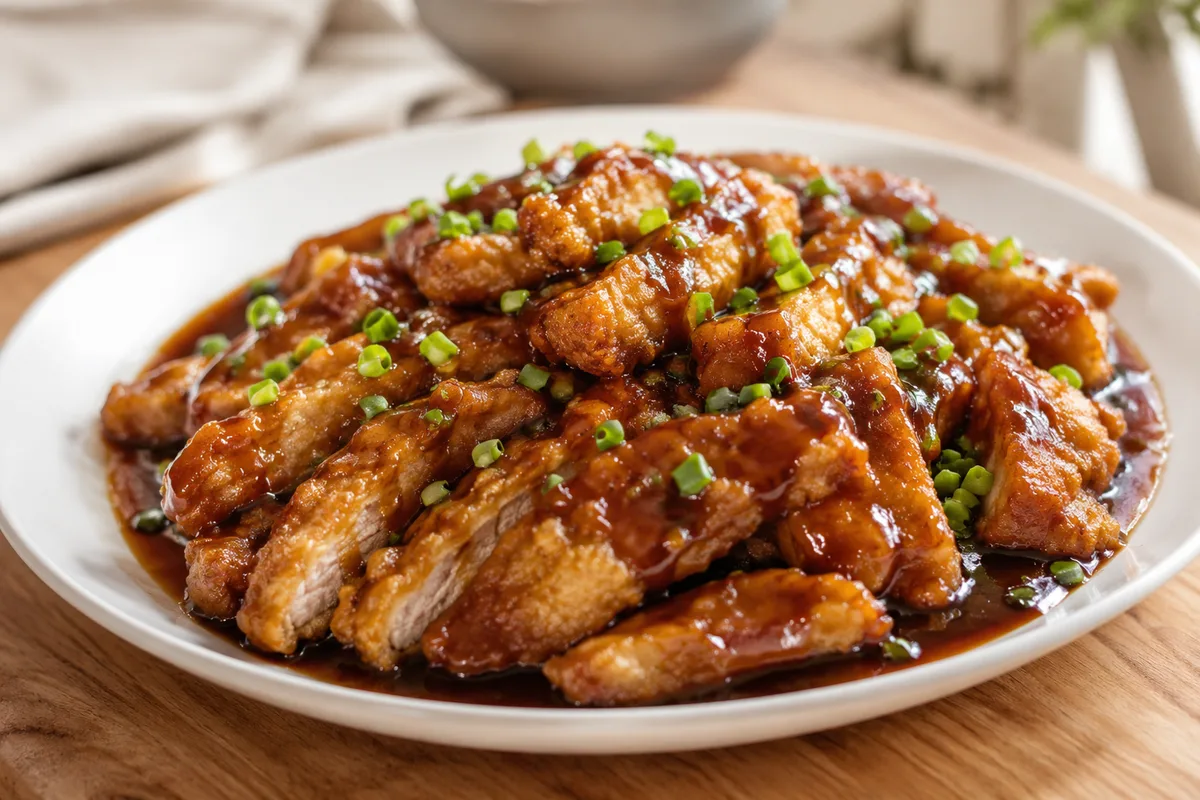
Chi jau kay takes a thin chicken cutlet, dips it in a generously beaten egg mixture, and fries it until the egg puffs up around the chicken into something closer to a savory omelette wrapped around meat than a standard breaded cutlet. It is a distinctly chifa technique, using egg as the entire coating rather than flour or breadcrumbs, and it's finished with a quick sauce of sillao — soy sauce, as every Peruvian kitchen calls it — and vinegar, which ties the whole dish together.
Like kam lu wantán, it demonstrates chifa's habit of applying genuinely Cantonese technique to build something that reads as neither fully Chinese nor fully Peruvian, just its own thing entirely.
Every town in Peru has a chifa, and the one in my town had a laminated menu with photographs so faded you ordered by number. Chi jau kay was 34. I ordered 34 for years without ever being able to spell it, and I am fairly sure the man who ran the place had stopped expecting anyone to.
Pound the chicken thin and even
An evenly thin cutlet cooks through at the same rate the egg coating browns, which is exactly the timing this dish needs — a thick, uneven piece of chicken either burns the egg before the meat cooks through, or leaves the center underdone while the outside is perfect.
The egg and the chicken need to finish at the same moment. That only happens if the cutlet is properly even.
Generous egg, hot oil, minimal fussing
Use plenty of beaten egg per cutlet — this isn't a light egg wash, it's meant to coat thickly and puff as it fries. Once the cutlet goes into hot oil, resist the urge to move it around too much; let it set and puff before flipping, or the coating can tear.
Where this sits on a chifa menu
A Peruvian chifa menu is organized by technique more than by ingredient, and chi jau kay belongs to the fried-and-sauced column — the same neighborhood as the wantán dishes and the sweet-and-sour ones, ordered when somebody at the table wants something crisp rather than something from the wok.
It almost never arrives alone. The default order is a plate of this alongside arroz chaufa for the table to share, because the sauce needs rice underneath it and nobody in a chifa orders a single dish for themselves.
The name is written a dozen different ways on Peruvian menus — chi jau kay, chijaukay, chi jau kai — because it was written down by ear from Cantonese long before anyone standardized the spelling. All of them mean the same plate.
Keeping the crust crisp under the sauce
This is the whole problem with the dish and the reason a bad chi jau kay is disappointing rather than wrong. Egg batter is tender, not armored, and sauce sitting on it turns it soft in a couple of minutes.
- Sauce it at the table, not in the pan. The chicken is fried, sliced and plated; the sauce goes over as it reaches whoever is eating. Tossing the two together in a wok is how it comes out soggy.
- Drain on a rack, never on paper. Paper traps steam under the pieces and softens the bottom crust while you are still cooking the rest.
- Fry in batches with room. Crowded oil drops in temperature, and batter that sits in cool oil absorbs it instead of setting.
What this dish does not survive is waiting. It is fried to order in every chifa in Peru, and it is the one part of the meal that has to leave the kitchen immediately.
The recipe
Ingredients
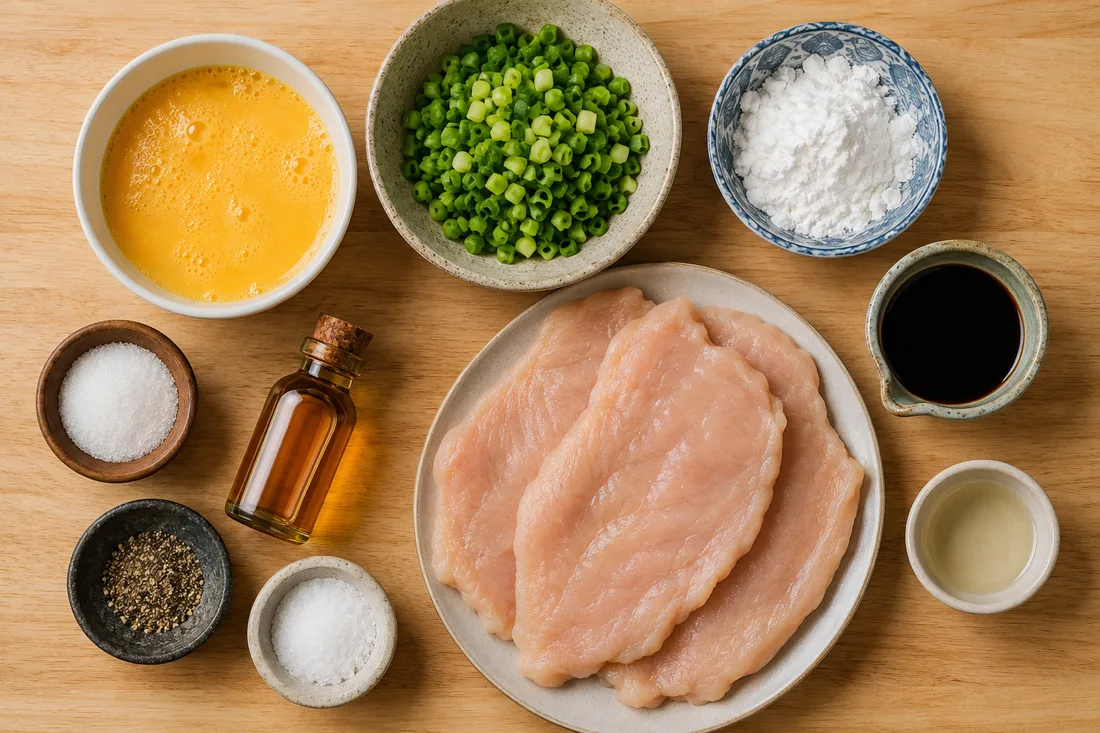
- 4 chicken breast cutlets, pounded thin
- 6 eggs, beaten
- 2 scallions, finely sliced
- 1/4 cup cornstarch
- 3 tbsp soy sauce
- 2 tbsp rice vinegar
- 1 tbsp sugar
- 1 tsp sesame oil
- Oil, for frying · salt · pepper
Method
- Season and dust the chicken with salt, pepper and cornstarch.
- Beat the eggs with scallions and a pinch of salt.
- Fry. Dip each cutlet in egg, fry until puffed and golden, 3-4 minutes per side.
- Make the sauce from soy sauce, vinegar, sugar and sesame oil. Slice the chicken and drizzle with sauce.
Troubleshooting, from experience
Egg coating tore or fell apart. The chicken was moved too soon after going into the oil. Let it set before flipping.
Chicken undercooked inside. The cutlets weren't pounded thin or even enough. Take the time to pound them properly.
Sauce tastes too sharp. Too much vinegar relative to sugar. Balance it to taste before drizzling.
What to serve it with
White rice or arroz chaufa on the side, exactly as chi jau kay is typically served at a chifa restaurant.
Questions people ask
What does the name mean? It is Cantonese carried into Peruvian Spanish and then spelled by ear, which is why you also see chijaukay and chi jau kay. The same thing happened to sillao, wantán and kion. Nobody in a Peruvian chifa is trying to reproduce the original spelling, and the dish has been Peruvian for three generations.
Can I use chicken thighs instead of breast? Yes, and they are more forgiving. Breast is traditional because it pounds flat and cooks in the time the batter takes to set. Thigh needs a minute longer and gives you meat that stays juicy — the trade is a slightly less even piece.
What goes in the sauce? Chicken stock, sillao, a little sugar and vinegar, thickened with cornstarch. It should be glossy and pourable, not thick — it dresses the chicken rather than coating it. Some chifas add ginger, some do not, and both are normal.
Is chifa Chinese food? It is Peruvian food with Cantonese parents. Chinese laborers arrived in the 1850s and cooked with what Peru had, and what came out is now its own cuisine — there are more chifas in Lima than there are in most Chinese cities of comparable size. Ordering chi jau kay in Guangzhou will get you a blank look.
Junior Quintana learned to cook from his mother, Lina, in Junín, in the central Peruvian Andes — a kitchen where chicha morada simmered every Sunday and there were always native potatoes with cheese and choclo on the table. He started Andean Kitchen to share the food he grew up with, in English and without shortcuts: every recipe cooked and tested at home, where it's really made. His favorite dish is, and probably always will be, pachamanca. See how we cook, test and photograph.
Did you cook this?
Tell me how it went — including what did not work. I read every one, and with your permission I will put it on this page, with your first name, for whoever comes next.