
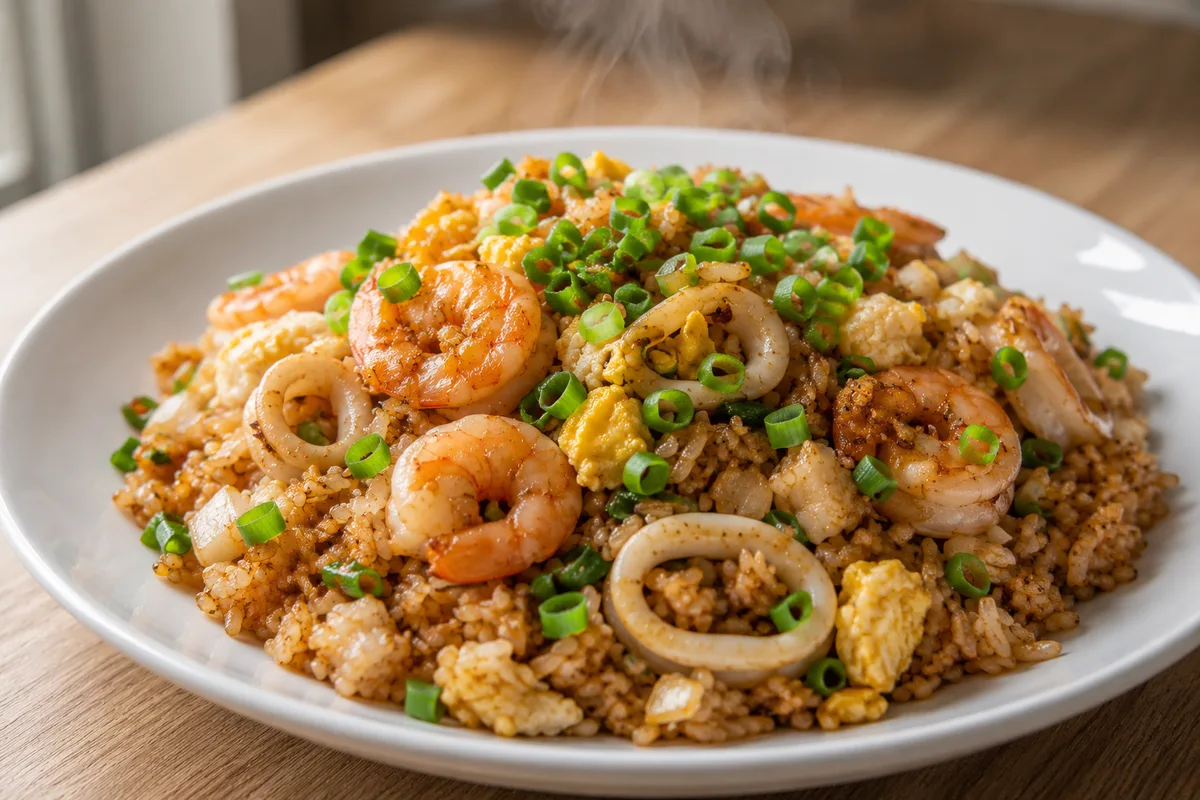
Chaufa de mariscos takes the basic technique of arroz chaufa — cold, day-old rice stir-fried hard and fast with egg, scallion and sillao — and swaps chicken or pork for shrimp and squid, an obvious move for a country with as much coastline as Peru. It is a natural extension of chifa logic: take the Cantonese fried-rice technique and adapt it to whatever protein makes sense locally, which on the coast means seafood.
The dish shows up constantly at chifa restaurants near the water, and it's a genuinely different eating experience from meat-based chaufa — lighter, with the shrimp and squid's own brininess coming through against the soy sauce.
The chifa in my town made chaufa with chicken, or with pork, or with whatever the kitchen had that day — never with seafood, because we were a long way from the sea and everybody knew it. The first chaufa de mariscos I ate was in Lima, and I remember thinking it was showing off. It was. It was also very good, and I have not been able to order the chicken one with a clear conscience since.
Cook the seafood separately, add it back at the end
Shrimp and squid cook fast and can turn rubbery if left in the wok through the entire rice-frying process — searing them separately first and folding them back in only at the very end keeps both properly tender rather than overcooked.
The rice needs several minutes of hard frying. The seafood needs about ninety seconds. Treating them the same ruins one or the other.
Same day-old rice rule applies
As with any chaufa, fresh warm rice turns gummy under high heat, while cold, day-old rice fries into separate, distinct grains — refrigerate your rice overnight before making this dish for the best texture.
Getting a home stove hot enough
A chifa wok runs at a heat no domestic burner reaches, and that heat is what gives chaufa its faint smoky edge. You cannot match it at home, but you can get close enough that nobody complains:
- Cook in two batches. A full pan of rice on a home burner steams instead of frying. Half at a time, then combine.
- Get the pan properly hot before anything goes in. Empty, over the highest flame, until a drop of water vanishes instantly.
- Use a wide steel or cast-iron pan if you have no wok. Surface area matters more than shape on a flat burner.
- Have everything cut and within reach. Once the rice hits the pan there is no time to go looking for the scallions.
Frozen seafood is fine and often better than tired fresh. Thaw it completely and dry it hard with paper before it goes near the pan — wet shrimp will not sear, it will boil.
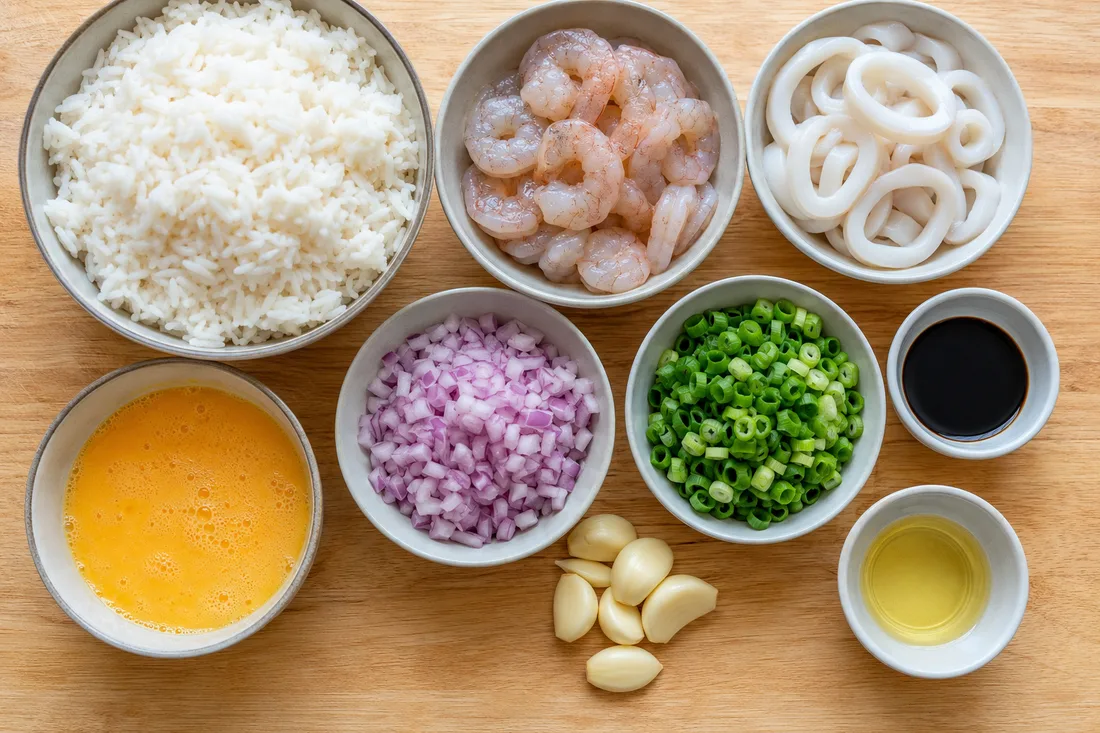
Which seafood, and when each one goes in
The mistake is treating "seafood" as one ingredient and throwing it in together. Each thing here cooks in a different amount of time, and the difference between two minutes and four is the difference between tender and rubber.
- Shrimp. Ninety seconds in a screaming hot pan, until they curl and turn opaque. Out immediately. They will get another few seconds at the end when everything comes back together.
- Squid. Under a minute, or over half an hour — there is nothing in between. In a chaufa it is the first: sear the rings hard and fast and pull them out while they still have bite.
- Scallops. Conchas de abanico in Peru. Barely cook them. Thirty seconds a side and they are done; they carry on cooking off the heat.
- Mussels and clams. Steam them open separately, take them off the shell, and add them at the very end. They only need warming.
Everything comes out of the pan and waits on a plate while the rice fries. It all goes back in during the last thirty seconds, folded through rather than stirred. That is the entire technique.
The recipe
Ingredients
- 3 cups cooked, cooled rice (day-old, ideally)
- 200g shrimp, peeled
- 200g squid, cleaned and cut into rings
- 2 eggs, beaten
- 1 onion, diced · 3 garlic cloves, minced
- 3 scallions, sliced
- 4 tbsp soy sauce
- 3 tbsp oil · salt · pepper · ground cumin
Method
- Sear the seafood separately just until cooked through. Set aside.
- Scramble the eggs lightly, set aside.
- Fry the rice. Stir-fry onion and garlic, add cold rice, tossing over high heat.
- Combine. Add soy sauce, return seafood and egg, toss with scallions until heated through.
Troubleshooting, from experience
Seafood turned rubbery. Left in the pan too long. Cook it separately and add it back only at the end.
Rice turned gummy. Fresh, warm rice was used instead of cold, day-old rice.
Dish tastes too salty. Soy sauce brands vary in saltiness — start with less and adjust to taste.
What to serve it with
Chaufa de mariscos is a complete meal on its own, needing nothing more than a wedge of lime.
Questions people ask
Does the rice really have to be day-old? Yes, and this is not a rule you can charm your way around. Fresh rice carries surface moisture and turns to paste in the pan instead of frying. Cook it the day before, spread it on a tray and refrigerate it uncovered so it dries out. Three hours in the fridge is the absolute minimum.
Can I use frozen seafood? Yes, and for most people outside Peru it is the sensible option. Thaw it fully in the fridge and dry it properly — wet seafood drops the pan temperature and steams the rice instead of frying it. A frozen seafood mix works, though the pieces will all be small.
My home stove is not hot enough. What do I do? Cook in two batches with less rice in the pan, use your widest and heaviest pan, and let it get properly hot before anything goes in. A crowded pan on a domestic burner steams. Two smaller batches beat one big disappointing one.
What is the difference between chaufa and Chinese fried rice? The seasoning and the lineage. Peruvian chaufa leans on sillao and ginger, often carries a little ají, and comes out of chifa kitchens that have been Peruvian for over a century. It is not an imitation of anything — it is its own dish, and there are more chifas in Lima than most people expect.

Junior Quintana learned to cook from his mother, Lina, in Junín, in the central Peruvian Andes — a kitchen where chicha morada simmered every Sunday and there were always native potatoes with cheese and choclo on the table. He started Andean Kitchen to share the food he grew up with, in English and without shortcuts: every recipe cooked and tested at home, where it's really made. His favorite dish is, and probably always will be, pachamanca. See how we cook, test and photograph.
Did you cook this?
Tell me how it went — including what did not work. I read every one, and with your permission I will put it on this page, with your first name, for whoever comes next.